Orchard
Trees sourced from Stark Brothers in Missouri and Spray's in Cheboygan. Half were planted in Fall of 2024, the rest Spring of 2025.
Irrigation in-ground lines installed by Josh Agee.
Overview
Tree Inventory:
- A: Van Sweet Cherry (Dwarf)
- B: North Star Sour Cherry (Dwarf)
- C: Bartlett Pear (Dwarf)
- D: Wolf River "1881" Apple (Semi-Dwarf)
- E: Chojuro Asian Pear (Semi-Dwarf)
- F: Montmorency Cherry (Dwarf)
- G: Carolina Belle Peach (Dwarf)
- H: Golden Delicious Apple (Dwarf)
- I: Seckel Pear (Dwarf)
- J: Pipestone Plum (Semi-Dwarf)
- K: Stanley Plum (Semi-Dwarf)
- L: Golden Delicious Apple (Semi-Dwarf)
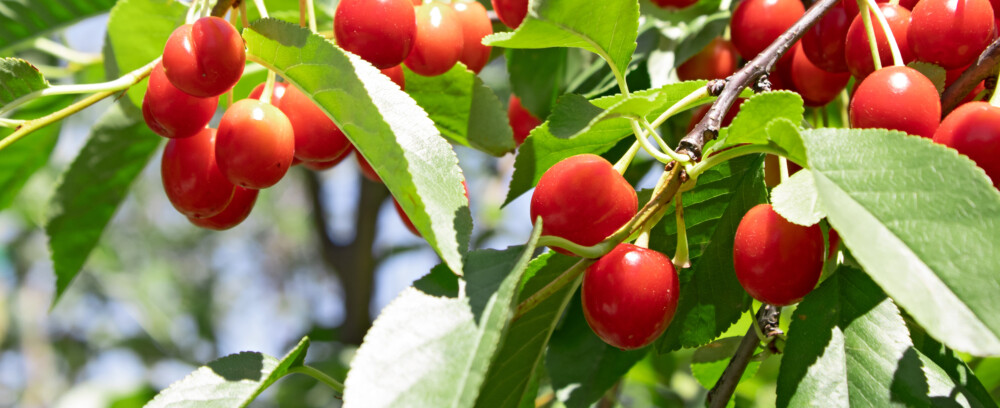
🍒 Cherries
Sweet types (A) need another sweet for pollination; both must bloom mid-spring to be compatible. If/when a tree dies, replace it with a sweet cherry. Sours (B, F) are self-fertile.
- Van Sweet
- North Star Sour
- Montmorency Sour
🍐 Pears
Bartlett (C) and Seckel (I) are partially self-fruitful but yield better with a partner like each other. Chojuro (E) needs another Asian or early European pear (e.g., Bartlett).
- Bartlett European
- Chojuro Asian
- Seckel European
🍎 Apples
All need or benefit from cross-pollination. Golden Delicious (H, L) is partially self-fertile but better yields with Wolf River (D). Wolf River (D) requires a pollinator like Golden Delicious.
- Wolf River
- Golden Delicious (2)
🍑 Peaches
Self-pollinating, no partners needed. Carolina Belle (G) is an early-season freestone. They bloom mid-summer.
- Carolina Belle
🫐 Plums
Pipestone (J) is hardy hybrid, vigorous tree yields large, deep red fruits with a golden blush, ripening in late summer. Ideal for northern orchards but needs an American or Canadian plum to pollinate... If/when a tree dies, replace with American or Canadian plum. Stanley (K) is a classic European that's self-fertile. A heavy, annual producer of medium to large, oval, dark blue fruits with a thick bloom. Ripening in early September. It's disease-resistant and perfect for humid climates, with higher yields when cross-pollinated.
- J: Pipestone
- K: Stanley
Site Preparation & Planting
Maintenance or replacements:
- Remove old/dead/damaged tree, roots, and debris.
- Test soil pH (6.0-7.0 ideal); amend as needed.
- Dig holes 2x root ball size
- Water well after planting.
Additional Tips:
- Amend soil with compost for drainage. Pears and cherries prefer slightly acidic; test and adjust.
- Mulch 3-4 inches around bases (keep 6 inches from trunks) to retain moisture—critical in summer.
- Dwarf/Semi-Dwarf sizes mean easier harvesting (8-15 ft tall); stake as-needed for wind.
Watering & Irrigation
- General: 1-2 inches/week, deep to encourage roots. Increase in heat/fruiting (July-August). - By Type: - Cherries/Peaches: Consistent moisture to prevent cracking; avoid wet leaves. - Pears/Apples: Regular for Bartlett/Chojuro to avoid stress; Wolf River/Golden Delicious tolerate some drought once established. - Use drip systems; check soil 6 inches down.
Fertilizing
Apply balanced 10-10-10 or organic in early spring and post-harvest but mid-summer for peaches. Variety Notes: Avoid excess nitrogen for fruit-focused trees like peaches/cherries. For pears, focus on potassium for sweetness. Spread under drip line; half-strength for young trees.
Pruning & Training
- Annual dormant pruning (late winter): Remove dead/crossing branches, open canopy for air/light. - By Type: - **Cherries**: Vase shape; prune 20-30% new growth. For sweets (A,B), maintain structure; Montmorency (F) yearly to shape. - **Pears**: Central leader; thin for airflow. Chojuro (E) may need more for heavy fruit - **Apples**: Central leader; prune to 20-30%. Wolf River (D) for size control. - **Peaches**: Open center; aggressive pruning (up to 50%) to renew fruit wood annually. - **Plums**: Open center; aggressive pruning (up to 50%) to renew fruit wood annually. - Summer thin fruit for larger yields (e.g., remove 50% small peaches now if overloaded).
Pest & Disease Management
Use IPM: Monitor, cultural controls first, then organics. - **Common Issues**: Aphids (soap spray), borers (prune), fungal (airflow). - **Specific to Your Trees**: - Tree A (Van Cherry): Japanese Beetles—Shake into soapy water daily; apply diatomaceous earth (DE) on leaves; consider Sevin if severe. - Tree F (Montmorency Cherry): Shot Hole Fungus—Improve air circulation/pruning; remove debris; apply copper fungicide now and in fall. - Tree L (Golden Delicious Apple): Fire Ants (likely at base)—Use borax+sugar bait or DE around mound; apply tanglefoot band on trunk to block access. - Prevention: Net for birds (cherries/peaches), companion plants like marigolds.
Weed Management
Weed-free zone 3-4 ft around each trunk; mulch annually. Reapply when thin during summer.
Harvesting & Storage
Harvest when ripe; yields increase after 3-5 years. - **By Variety (Approximate Times, Adjust for Zone)**: - **Cherries**: Pick firm/red; store refrigerated 1 week. - A (Van): Mid-June, deep red/sweet. - B (Starking): Mid-late June. - F (Montmorency): Late June-July. - **Pears**: Pick firm, ripen off-tree at room temp; store cool 1-3 months. - C (Bartlett): Mid-summer (now-ish), green-yellow. - E (Chojuro): Late Aug-mid Sep. - I (Seckel): Late summer, small/sweet. - **Apples**: Pick when seeds brown; store cool 2-4 months. - D (Wolf River): Late summer-fall, large cooking apples. - H/L (Golden Delicious): Mid-late fall, yellow/sweet. - **Peaches**: Tree-ripen for flavor; handle gently, store room temp 2-3 days or fridge 1 week. - G (Carolina Belle): Mid-summer, white freestone. - J (Burbank July Elberta): Late July, yellow. - K (ScarletPearl): Early July, early season. - Thin excess fruit for better size; process extras (jam, freeze).
Seasonal Maintenance Checklist
Troubleshooting
Poor Fruit Set: Check pollination—add partners if needed (e.g., for Chojuro).
Yellow Leaves: Nutrient/water issue—test soil.
Cracked Fruit: Inconsistent water—mulch.
Low Yields: Age/pruning—trees mature in 3-5 years.
Sick Trees: Consult arborist as-needed.
